
10 signs your IT support is reactive, not proactive

Because yes, organizations are becoming aware of something: the importance of proactive technical support. However, some companies continue to use the traditional break/fix model, which involves calling IT professionals only when something goes wrong. This reactive methodology can lead to prolonged downtime, higher costs, as well as staff frustration, agent burnout, and a higher turnover rate, as they must intervene when a crisis arises.
But don't worry... As we saw in the initial example, proactive technical support offers many solutions. Why? Because it focuses on identifying and addressing potential problems before they become major incidents, helping companies save time, money, and resources. In other words, it's a methodology that allows for reduced downtime, increased efficiency, and ensures that the technological infrastructure always functions at its best. In this article, we will help you understand the main differences between both models so you can comprehend what type of support you have in your organization. But first things first...
What is support service?
An IT support service is a set of activities designed to help users resolve technical problems and manage an organization's technological resources. These services can include technical assistance, system maintenance, network management, and security, among others. In short, the main objective is to ensure that IT systems function smoothly and efficiently.
Why is support service so important?
IT support is crucial because technological systems are at the core of modern operations. Efficient support not only resolves problems when they arise but also prevents failures, improves security, and optimizes infrastructure performance. For example, as we said, a proactive approach can anticipate and mitigate problems before they affect operations, which translates into increased productivity and lower long-term costs. Now, the million-dollar question is: How can I tell if I have proactive or reactive support?
10 elements to check to know if you have reactive or proactive support
Comparison between reactive and proactive support
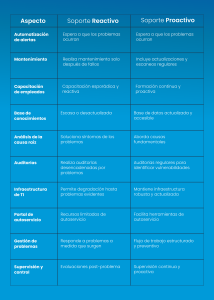
1. Alert automation
Proactive Automatically detects and notifies of potential problems before they cause disruptions. It uses monitoring tools that analyze system performance in real-time and generate alerts for potential failures.
Reagent waits for incidents to occur and be reported by users before taking action. It lacks automated alerting systems and relies on manual intervention to identify problems.
2. Maintenance
Proactive include regular security updates and scans to prevent issues. Routinely implement software patches and upgrades to keep the infrastructure up-to-date.
Reagent Perform maintenance and updates only after problems arise. Patches and updates are applied in response to detected failures or vulnerabilities.
3. Continuous employee training
Proactive Continuously train employees to improve their use of IT tools and their ability to prevent problems. Offer regular, updated training programs on new technologies and best practices.
Reagent offers training solely in response to failures or after knowledge gaps are identified. Training is sporadic and not regularly updated.
4. Database Creation
Proactive maintains an up-to-date database of solutions and procedures to facilitate quick access to information. This database is accessible to all employees and is updated frequently.
Reagent It often lacks a database with relevant information. This makes problem-solving dependent on the experience, improvisation, and knowledge of technicians. Furthermore, the documentation is scarce or outdated.
5. Root Cause Analysis
Proactive Analyze and address the root causes of problems to prevent recurrence. Use analysis techniques such as the Ishikawa diagram to identify and solve underlying issues.
Reagent It focuses on addressing the symptoms of problems as they occur without investigating or resolving the underlying cause. Problem-solving is superficial and temporary.
6. Regular Audits
Proactive Perform regular audits to identify and resolve vulnerabilities before they cause problems. Audits cover all aspects of the IT infrastructure, from security to performance.
Reagent Audits are less frequent and are usually triggered by problems that have already occurred. The lack of regular audits exposes vulnerabilities that could have been prevented.
7. Strengthening IT Infrastructure
Proactive Build and maintain a robust infrastructure to prevent problems. Invest in advanced technologies and in the constant updating of hardware and software.
Reagent often allows infrastructure to degrade until problems become apparent and cause failures. Updates are run only when unavoidable.
8. Self-service portal
Proactive Provides self-service tools for users to resolve issues on their own, reducing the workload of technical support. Includes tutorials, FAQs, and troubleshooting guides accessible online.
Reagent provides limited self-service resources, forcing users to rely more on direct technical support. The lack of self-service tools increases problem resolution time.
9. Problem Management Workflow
Proactive Utilize a structured workflow to manage issues efficiently before they escalate. Implement incident and problem management systems that enable quick and effective resolution.
Reagent solve problems as they arise, which can lead to inconsistent responses and irregular crisis management. The lack of a structured process can result in ad-hoc solutions.
10. Continuous Monitoring and Control
Proactive Continuously monitor the state of IT assets to make proactive informed decisions. Utilize advanced monitoring tools that provide real-time insights into system performance and health.
Reagent evaluations only after problems affect systems, often resulting in hasty, poorly informed decisions. Lack of continuous monitoring increases the risk of unexpected disruptions.
Do you want to implement proactive support in your organization? Nublit is your ideal partner to do it.
For over a decade, we have offered cloud services and have excelled in our ability to provide robust infrastructure and customized services that help institutions of all kinds improve their support, efficiency, and security.


